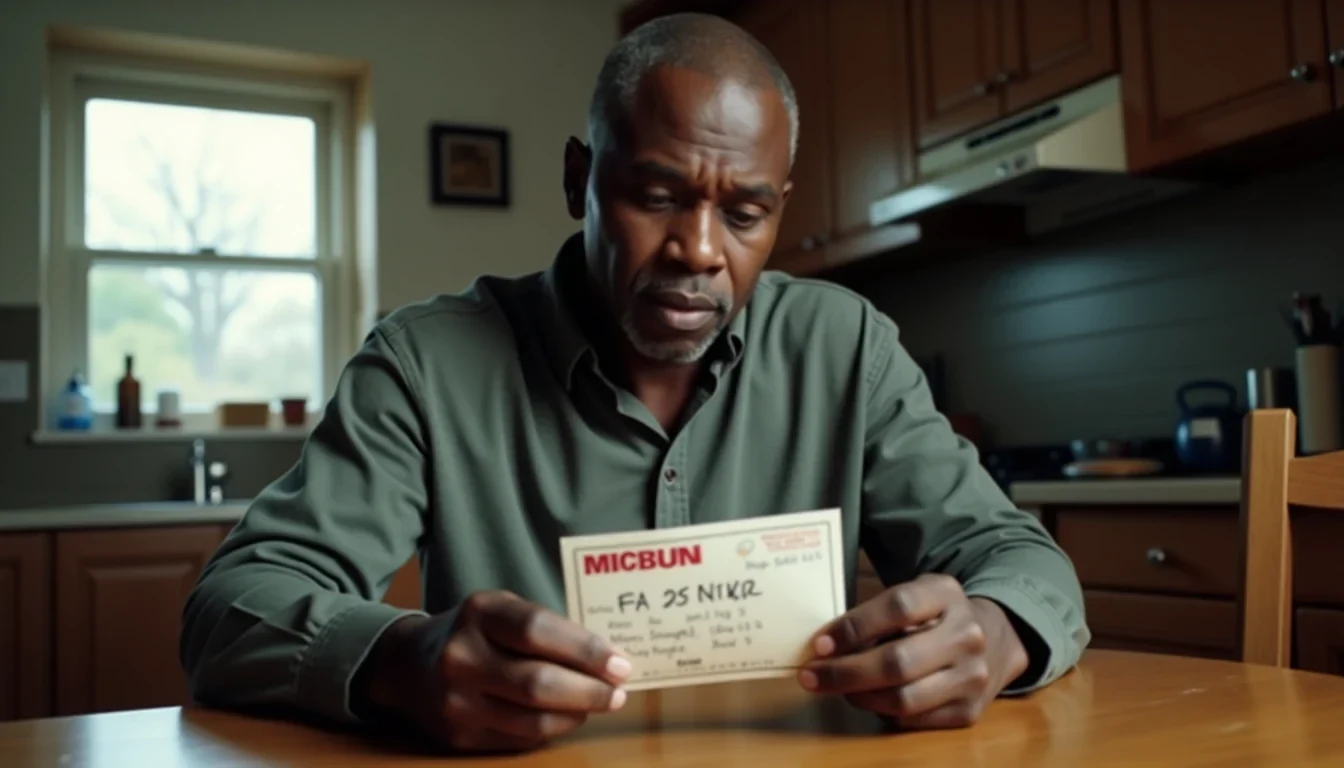
The R5 million PowerBall jackpot that landed on 12 July 2019 sits in Thabo Mokoena’s memory like a photograph he cannot burn. He had played 4, 11, 23, 31, 42, and PowerBall 14 for eighteen months straight. On the draw date he was short R20 for the full ticket. He dropped the PowerBall selection to keep the stake down and watched 14 roll out of the machine. Five numbers matched. The sixth, the one he had abandoned, was the only barrier between his current shift work and a life he had already begun furnishing in his head. He remembers the couch he would have bought. He remembers the argument with his sister he would have ended by paying her bond. The actual R4,230 payout for five numbers without the PowerBall cleared his overdraft and vanished. The imagined R5 million persists.
This is the anatomy of a near-miss. Mokoena’s story is unremarkable only in how common its shape has become among South African punters. The National Lottery processes roughly 15 million entries per draw. For every jackpot winner, thousands sit with five-of-six or four-of-five-plus-PowerBall combinations that activate something more durable than ordinary loss. The brain constructs a parallel timeline, vivid and operational, in which the ticket was complete, the bet was left to run, the numbers were not changed at the last petrol stop. That imagined timeline becomes a place the punter revisits, sometimes for years, with greater emotional precision than many actual victories.
How the brain turns almost into forever
The persistence of near-miss memory owes less to sentiment than to neurochemistry. Dopamine pathways activated by genuine wins also fire with measurable intensity when outcomes fall just short of reward. The slot machine displaying two sevens and a third symbol one position above the payline produces a neurological event closer to winning than to blank loss. The punter experiences a partial reward without the reward itself. This combination keeps the behaviour alive more effectively than consistent small payouts would.
Counterfactual thinking amplifies this effect. The mind generates alternative realities with automatic ease, constructing the moment the roulette ball settled on adjacent black 18 instead of red 19, or the afternoon the accumulator’s tenth leg drew instead of won. These constructions are not vague wishes. They are detailed simulations, often including specific spending decisions, family reactions, and the resolution of longstanding financial pressures. The detail makes them haunt. A R200 scratch-card win produces momentary pleasure and rapid normalisation. A missed R2 million jackpot produces a narrative with characters, settings, and plot.
The emotional signature differs by scenario. The punter who forgot to enter a draw, or who changed a combination that subsequently won, carries an additional burden of agency. The error was theirs, which transforms probability into personal failure. By contrast, the accumulator that falls on its final leg, or the slot symbol that lands one position off, preserves the punter’s sense of having chosen correctly. Both categories persist in memory. The first breeds rumination, while the second breeds something closer to grievance against fortune.
Two ways to read the same miss
Punters typically resolve near-misses into one of two interpretive frameworks. The choice between them predicts future behaviour with uncomfortable reliability.
The “getting closer” reading treats proximity as information. Five numbers from six, nine legs from ten, the bonus symbol on two reels instead of one, these become evidence of a trajectory. The punter’s luck is improving, their system is validating, their patience is being tested before reward. This interpretation is cognitively comfortable because it preserves the investment narrative. Time and money spent were not wasted but accumulated toward an approaching threshold. The next ticket, the next spin, the next Saturday draw, carries the weight of this supposed momentum.
The coincidence reading treats each outcome as independent. The near-miss was numerically adjacent but probabilistically identical to any other loss. The punter who adopts this frame typically arrives through either mathematical training or accumulated disappointment. This offers protection against escalation. It does not, however, offer protection against memory. Even statistically informed punters report the same vivid counterfactuals, the same involuntary reconstructions of what would have followed a win. They simply refuse to act on them.
These readings are not stable positions. The same punter may shift between them depending on context, recent outcomes, and social environment. A near-miss shared among friends who validate the “so close” framing tends to solidify it. A near-miss discussed with a financially cautious family member may be reframed as warning. The story’s survival depends partly on the audience that receives it.
The stories we keep telling
Near-miss narratives circulate through South African gambling culture with distinctive patterns. The betting shop, the queue at the National Lottery terminal, the WhatsApp group for pool syndicates, these are environments where such stories gain currency through repetition. Each retelling adds detail, sharpens consequence, and confirms the teller’s identity as someone who has brushed against significant fortune. The story becomes social capital more durable than the actual capital that was not won.
Certain scenarios recur with enough frequency to function as types. The changed combination that would have won. The cash-out accepted before the final leg turned the bet. The ticket left in a jacket pocket, discovered after the draw. Each type carries its own emotional choreography and its own implied moral. The forgotten ticket punter learns vigilance. The early cash-out punter learns patience, or pretends to. The changed combination punter learns nothing because the lesson would require accepting that no combination is more likely than any other, a truth that dissolves the entire enterprise.
The persistence of these stories serves functions beyond individual psychology. They maintain community cohesion among punters, establish hierarchies of experience, and provide narrative resources for interpreting future outcomes. The punter who has survived a memorable near-miss enters subsequent play with a story already prepared, whatever the result. A win completes the arc. A loss extends the suspense. Another near-miss compounds the legend.
The invitation
The PowerBall draw on 23 March 2021 produced no jackpot winner but generated at least three widely circulated near-miss accounts in Gauteng alone. Each involved five matched numbers and a single deviation. One punter had the correct PowerBall on a separate ticket for the same draw. Another had played the winning combination two draws earlier and abandoned it. The third had misread the cutoff time and watched the draw proceed without their entry. These accounts appeared on social media within hours, unsolicited and unprompted, offered as contributions to a collective archive that no official body maintains but many unofficial participants populate.
This archive is the subject here, not the statistics of near-miss probability or the warnings of responsible gambling messaging. The punters who contribute to it are not requesting analysis. They are performing recognition, seeking the particular solidarity that comes from having constructed an alternative life in detail and watched it remain alternative.
If you have such a construction, if you remember the specific furniture you would have bought, the specific debt you would have cleared, the specific conversation you would have finally had, the comment section below this article is where that memory can complete its social journey. The R5 million that Thabo Mokoena did not win in July 2019 has been told before. The one you did not win has not. The distinction between these categories is smaller than probability suggests and larger than financial accounting can measure.