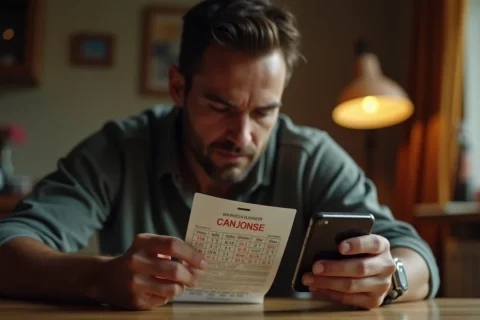
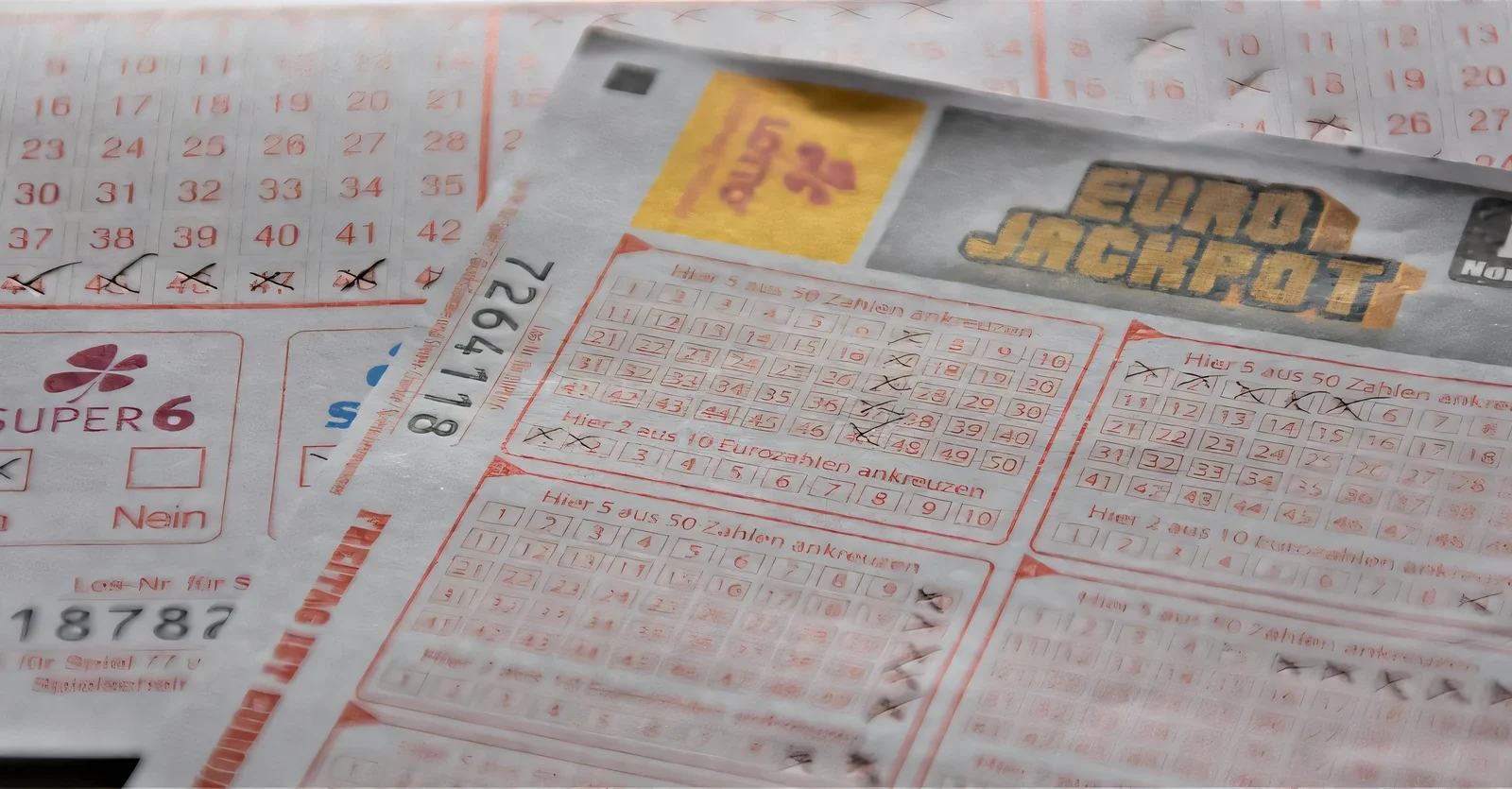
A R5 Lotto ticket and a Nando’s Quarter Chicken meal sit at opposite ends of what money can buy you on a Tuesday evening. The meal vanishes in fifteen minutes. The ticket, meanwhile, stretches across days: the wait for Saturday’s draw, the conversations with colleagues about which numbers feel lucky, the idle calculation of whether R15 million clears the bond or just the car. One purchase ends in crumbs. The other ends in a result, but also in a week of imagining who you might become.
What the Brain Does With a Small Stake
The dopamine hit arrives before the numbers are drawn. Neuroscientists mapping reward anticipation have found that the period between wager and outcome triggers the brain’s “hope circuit” more reliably than many actual wins. A R5 Lotto board or R7.50 PowerBall line purchases entry into this anticipatory state, where possibility feels briefly tangible.
This mechanism explains why near-misses keep players engaged. Matching three of six numbers in a Lotto draw activates similar neural regions to a genuine win, reinforcing the sense that the jackpot hovers just out of reach. The illusion of control adds another layer: players who select their own numbers, perhaps birthdays or anniversaries, report stronger emotional investment than those receiving random picks. The stake is tiny, but the psychological machinery it engages is outsized.
The availability heuristic compounds this effect. Every headline about a R232 million PowerBall winner, like the single-ticket holder who claimed that exact amount in February 2019, makes the extraordinary feel proximate. The probability stands at roughly 1 in 42.4 million for the PowerBall jackpot, yet the vividness of winner stories compresses this distance in the imagination.
The Fantasy Catalogue
South African players dream specifically. Their jackpot fantasies carry local textures: clearing the bond on a house in a security estate, building a family home in the Eastern Cape or Limpopo, funding a child’s university fees in full, or retiring parents who still work past sixty because they must. Travel aspirations tend toward Dubai, Europe, or a proper Kruger National Park safari without counting the nights. Entrepreneurship appears repeatedly, the desire to start a business that employs others from one’s own community.
These fantasies reflect something beyond individual aspiration. The emphasis on extended family, on lifting others alongside oneself, mirrors communal values that routine consumption cannot address. A streaming subscription entertains one household. A jackpot fantasy, however unlikely its resolution, radiates outward through imagined generosity.
The “hope tax” framing captures this neatly. Players describe their R5 or R7.50 as purchasing not a statistical chance but a temporary right to inhabit an alternative life. The cost is negligible; the psychological benefit, they argue, persists through the waiting period regardless of outcome.
What Else That Money Buys
The comparison set is deliberately mundane. A Nando’s Quarter Chicken and chips runs R60 to R80. A standard cinema ticket at Ster-Kinekor or Nu Metro costs R90 to R120 for a single screening. Monthly Netflix access ranges from R49 to R99. A 1GB mobile data bundle from Vodacom or MTN sits around R60 to R85. A specialty coffee and pastry at a local café easily reaches R50 to R70.
Each delivers immediate, finite gratification. None opens the door to radical transformation, however imaginary. The jackpot bet’s value proposition is not superior to these; it is categorically different. Routine consumption addresses present wants, while the small wager purchases future-oriented speculation about who one might become.
Critics counter that this is precisely the problem. The rational economic view holds that negative expected value propositions deserve no defence. Money spent on 1-in-42-million outcomes is money wasted, regardless of how small the individual stake or how pleasant the intervening fantasy. This position is internally consistent and difficult to refute on its own terms.
Where the Debate Actually Sits
The productive tension lies between two irreconcilable frameworks for measuring value. The critic applies financial mathematics: expected return, probability, compound opportunity cost. The player applies experiential accounting: hours of anticipation, quality of conversation, intensity of imagined relief. Neither framework can fully assimilate the other.
Local products structure this tension deliberately. National Lottery’s Daily Lotto, at R3 per ticket, guarantees a daily winner with jackpots in the R300,000 to R500,000 range. This is frequent enough to sustain hope without requiring multi-week rollovers. Hollywoodbets and Betway offer soccer prediction jackpots where R1 to R10 stakes can unlock R100,000 to over R1 million, translating sports knowledge into speculative possibility. Progressive slots like Mega Moolah pool small spins across networks into multi-million rand pools. Each product optimises for the small-stake, high-fantasy dynamic in a slightly different register.
The Lotto Plus extensions illustrate this engineering explicitly. For an additional R2.50 per board, a player’s numbers enter two extra draws, multiplying fantasy access points for minimal incremental cost. The base ticket already purchased the psychological state; the Plus options extend its duration.
The Uncomfortable Question
Whether this constitutes affordable entertainment or exploited delusion depends on which measuring tape you deploy. Players understand the odds. They are not deceived; they are purchasing something other than the odds. The R5 or R7.50 buys permission to speculate, to discuss, to temporarily inhabit a self who is debt-free, generous, secure.
The critic’s framework cannot accommodate this purchase without converting it back to financial terms, where it necessarily fails. The player’s framework struggles to defend itself without sounding evasive or romantic. Neither side has found language that convinces the other, which may be why the debate persists with such peculiar intensity.
Millions of South Africans regularly choose the ticket over the additional data bundle, the extra coffee, the upgraded streaming tier. They are not confused about probability. They are voting, with small sums and full awareness, that the anticipation itself holds value the consumption cannot replicate. Whether that vote deserves respect or intervention is the argument that will outlast any single draw.