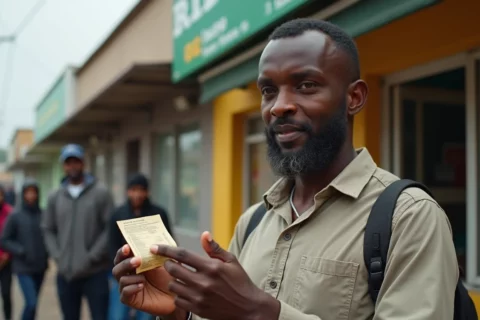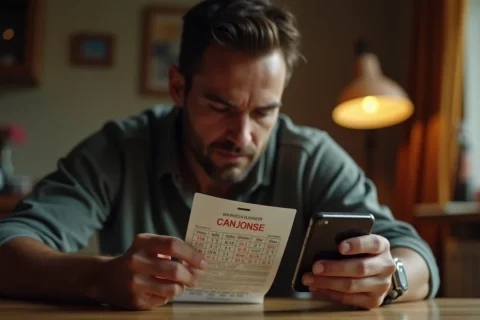

A R100 million jackpot does not sell tickets because anyone expects to win. It sells tickets because the idea of winning is worth the price of admission. Walk into any Total, Pick n Pay, or corner shop on a Friday afternoon and watch the queue. The woman ahead of you is not calculating expected value. She is deciding between the Clifton apartment and the Sandton compound she will never view in person. The man behind you has already mentally resigned from a job he cannot afford to leave. This is the product. The numbers on the ticket are almost incidental.
South African operators understand this better than most. Ithuba’s PowerBall has built its brand on this architecture of fantasy. The February 2019 draw that reached R232 million remains the benchmark. That figure made one person wealthy, became a national reference point, conversational currency, and a reason to participate in something larger than a gamble. News24, IOL, TimesLIVE, every radio call-in show for a week, the WhatsApp group where someone always claims to know the cousin of the winner: the operator purchases this saturation at the cost of one payout. It is expensive marketing that happens to change a life.
Why the Single Payout Commands Attention
The psychology is not subtle. A jackpot of this scale promises what employment, entrepreneurship, and property accumulation cannot deliver to most South Africans: total, instantaneous transformation. Debts clear in a morning. The extended family receives houses. Children attend schools previously accessible only to the already-wealthy. For players in a country where generational wealth remains concentrated and historical inequality persists, the single massive win represents a plausible miracle because it has actually occurred, because the R232 million winner exists somewhere, even anonymised, even silent.
Possibility overrides probability. The mathematical reality, that a single ticket holds microscopic odds, cannot compete with the narrative that someone, somewhere, recently became unrecognisable to their former self. The “what if” fantasy is the product. Operators who structure prize pools around one headline figure are serving player behaviour precisely.
Many Winners, Many Stories
Consider the same R100 million distributed differently: five hundred individuals receiving R200,000 each. The arithmetic is identical, but the human experience is not.
R200,000 repairs the roof that has leaked through three winters. It clears the furniture account, the school arrears, the medical debt to the GP who finally stopped seeing the family without upfront payment. It funds the spaza shop expansion, the second-hand delivery vehicle, the certificate course that qualifies someone for the promotion they have been passed over for twice. These are not fantasies of escape. They are interventions in real, ongoing difficulty.
The National Lottery’s Daily Lotto operates in this register, with jackpots typically between R200,000 and R500,000 and draws every day of the week. Hollywoodbets and Betway build their sports products around frequent, smaller payouts that reward specific knowledge with immediate return. Scratch cards deliver their feedback in seconds. The dopamine arrives on schedule. The player does not wait for a Tuesday announcement that someone in Limpopo has altered their entire existence.
Three Perspectives on the Trade-Off
From the operator’s position, the choice is strategic rather than moral. A giant jackpot is acquisition. It brings in the casual player who buys one ticket when the figure crosses some psychological threshold, who would not otherwise participate. Media coverage is purchased at payout cost, and the spike in sales often funds the prize itself. But the model risks fatigue. Rollover after rollover without a winner produces cynicism, the sense that the game is rigged against participation itself.
Distributed prizes retain. The player who wins R1,500 on a Saturday soccer multiple returns the following weekend with studied form. The Daily Lotto regular develops ritual, loyalty, a sense that the system delivers something back. The operator sacrifices national headlines for predictable revenue and lower churn. The administrative burden increases, thousands of small payouts replacing one large transfer, but the player base stabilises.
The individual player’s perspective depends on what they need from the experience. The desperate and the dreamers gravitate toward the single transformation. The pragmatic, the already-committed, those who gamble for entertainment rather than escape, prefer frequency and tangibility. Neither group is irrational. They are purchasing different psychological services with the same stake.
Society receives different outputs from each structure. The massive jackpot produces visible winners, aspirational narratives, conversations about wealth and chance that transcend gambling itself. The distributed model produces quieter, more numerous improvements, debt reductions and small business seeding that accumulate without generating headlines. The National Gambling Board regulates both without preferring either, mandating transparency in allocation and payout structure.
What the Preference Reveals
The tension between these models maps onto something older than gambling. Humans have always struggled to weight extraordinary possibility against reliable improvement. The lottery player choosing PowerBall over Daily Lotto is the same figure who buys the speculative stock, who emigrates without a position arranged, who proposes marriage on insufficient evidence. The preference for distributed prizes belongs to the pension contributor, the insurance purchaser, the employee who values security over upside.
South Africa’s particular economic geography intensifies this. Where conventional paths to wealth remain blocked for most, the single jackpot acquires disproportionate imaginative power. It is not merely money. It is the only available mechanism for complete class transcendence, the fantasy that one’s children will not face the same constraints. The R232 million winner received a different possible history for their family.
Yet the R200,000 winner, multiplied across hundreds of individuals, produces aggregate transformation that may exceed the single headline. Five hundred repaired roofs, cleared debts, funded qualifications. No single story dominates conversation, but the societal fabric shifts incrementally. The operator who offers this product is not selling fantasy. They are selling a plausible, achievable, frequent improvement that respects the player’s need for tangible return.
Neither structure is correct. Both reveal something about what South African punters, and humans generally, require from chance: sometimes the dream of total transformation, sometimes the relief of manageable progress. The operator’s skill lies in offering both, in the correct proportion, to the correct audience, at the correct moment.